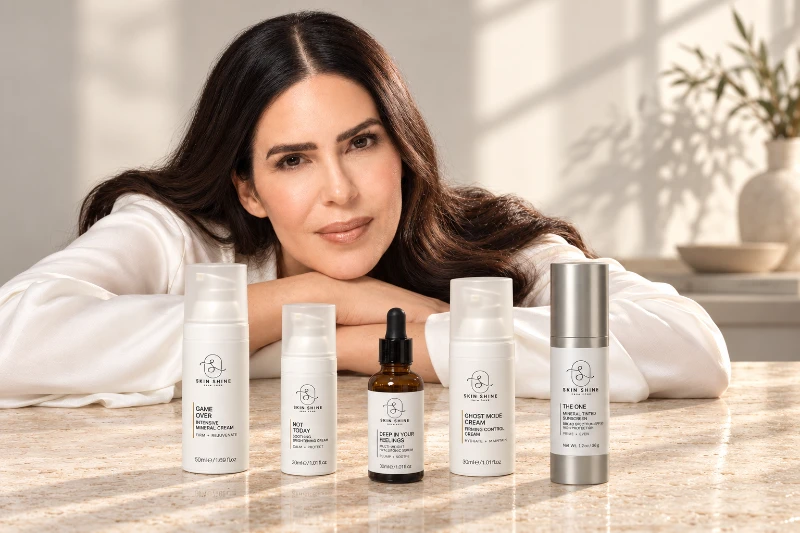
I did not create a skincare line because the world needed more pretty bottles. I created it because, after more than twenty years with melasma and years of working with pigment-prone skin, I could not find one coordinated home system that did everything I wanted it to do.
I wanted control over the ingredients and the quality. I wanted professional-level formulas that felt elegant enough to use every day. I wanted multi-pathway pigment support without forcing every client into hydroquinone. I wanted barrier care to be treated as essential, not as an afterthought. Most of all, I wanted every formula to make sense next to the others.
Melasma does not need a random shelf of actives. It needs a strategy.
The problem I kept seeing
Many women arrive with a bathroom cabinet full of strong products. One serum came from a social media recommendation. An acid came from a friend. A prescription was left over from a previous plan. A scrub promises faster results. Each product may be reasonable on its own, but together they create irritation, confusion, and inconsistency.
For pigment-prone skin, that chaos matters. Burning and peeling are not proof that a formula is working. Repeated irritation can disrupt the barrier and contribute to inflammation and post-inflammatory pigmentation. A good melasma routine has to correct without constantly provoking the skin.
Why the line is hydroquinone free
Hydroquinone is not the enemy. It is one of the most studied and effective topical treatments for melasma, particularly when used in a physician-supervised plan. I respect that evidence.
I chose to make my line hydroquinone-free because I wanted a complete system that could support long-term home care without depending on hydroquinone as the central ingredient. Some clients cannot or do not want to use it. Others need a maintenance routine between medically supervised cycles. I wanted strong options for those people.
Hydroquinone-free does not mean passive. It means combining ingredients that influence different pigment pathways while also respecting the barrier. No single ingredient has to carry the entire plan.
The principles behind every formula
Multiple pigment pathways
Pigment production is a process, not one switch. My approach uses different ingredients to influence pigment signaling, melanin formation, transfer, exfoliation, oxidative stress, and the visible accumulation of discoloration. This is the thinking behind Not Today and the Ghost Mode formulas.
Barrier support
A compromised barrier can feel tight, dry, hot, itchy, or reactive. It also makes it harder to tolerate corrective ingredients. Deep In Your Feelings barrier serum and Second Chance barrier cream were created to help restore comfort and resilience. The moisturizers allow the routine to match the skin rather than forcing every face into one texture.
Consistency at home
I use a 20 percent clinic and 80 percent home philosophy. Professional guidance can establish direction, but the daily routine creates the environment in which change can continue. Products have to feel good, layer well, and be simple enough to use consistently.
Daily protection
No pigment routine is complete without protection from ultraviolet and visible light. The One Mineral Sunscreen comes in two versions: The One Mineral Tinted and The One Mineral Invisible. Both use 20 percent zinc oxide. The tinted version also contains iron oxides for added visible-light protection. Both are non-nano, fragrance-free, and designed for everyday wear.
How the fifteen product system works
The line contains fifteen products, but that does not mean every person needs all fifteen. A professional routine should be built around the individual skin, tolerance, goals, lifestyle, and environment. Where you live, how much time you spend outside, your daily schedule, your work environment, and what your skin is exposed to all influence how the routine should be designed.
Cleanse
Clean Slate is the starting point. Cleansing should remove the day without leaving pigment-prone skin feeling stripped or punished.
Hydrate and support
No Drama is the moisturizer for oily or acne-prone skin. Unbothered supports normal to dry skin. Second Chance is the richer barrier cream, and Deep In Your Feelings is the barrier-supporting serum for skin that needs calm, hydration, and resilience.
Correct visible pigment
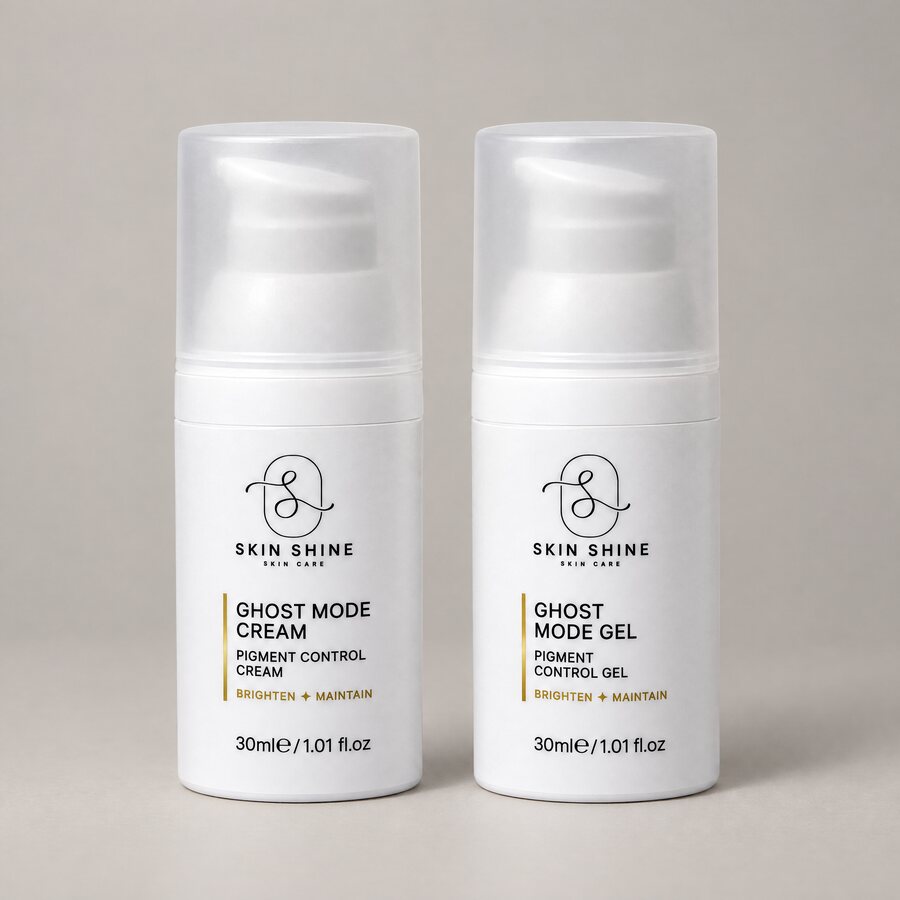
Ghost Mode Gel and Ghost Mode Cream offer pigment-correcting options in different textures. Not Today is a multi-pathway pigment corrector featuring tranexamic, ellagic, phytic, and sebacic acids. Topical TXA is useful, but I never depend on TXA or any other single ingredient as a standalone. Pigmentation, especially melasma, is never a one-ingredient story.
When I build a pigmentation protocol using a selected Ghost Mode formula together with Not Today, the client may already be using roughly 15 different corrective and supportive ingredients in that day’s routine. Those ingredients are chosen to work across different pathways rather than asking one trendy active to do everything.
This does not mean every client needs the same combination or that more is automatically better. It means I design the protocol as an organized system. I choose ingredients for their roles, compatibility, tolerance, and place in the larger routine.
Renew thoughtfully and support irritated skin
Game Over combines 10 percent glycolic acid with 1 percent retinol as a hydroquinone-free alternative for an advanced nighttime routine. Lit combines 10 percent lactic acid with hyaluronic acid. These renewal products are not meant to be stacked carelessly, and their frequency should match the skin. Flake Off serves a different purpose. It is designed for flaky, dry, irritated skin, where the priority is supporting comfort rather than adding more exfoliation.
Support brightness and the eye area
Not On My Watch is a stable vitamin C formula designed for daytime support, and Wide Awake supports the delicate eye area. Brightening works best when it is part of an organized routine, not a war against the skin.
Protect
The One completes the routine because correction without protection is a revolving door. The One Mineral Tinted and The One Mineral Invisible both use zinc oxide for mineral ultraviolet protection. The tinted version also contains iron oxides for visible-light protection, which is particularly relevant for melasma and dark spots.
What makes the line different
- It was designed around stubborn melasma and discoloration, not added to a generic anti-aging line as an afterthought.
- A pigmentation protocol can combine a dozen or more distinct corrective and supportive ingredients, with roughly 15 available through Ghost Mode Gel or Cream plus Not Today alone.
- It is entirely hydroquinone-free while respecting the legitimate medical role of hydroquinone.
- It combines pigment correction with barrier support, hydration, and daily protection.
- It offers different textures for oily, acne-prone, normal, dry, and compromised skin.
- It is built as one coordinated system, so products can be selected with intention.
The skincare line is not the whole answer
I am proud of these formulas, but I will not tell a woman that a bottle can do all the work. Melasma is influenced by lifestyle, environment, light exposure, daily habits, hormones, inflammation, genetics, irritation, and personal health context. Great skincare can reduce visible pigment, support the barrier, and protect progress. The routine still has to fit the life being lived and the environment surrounding the skin. It cannot resolve every internal contributor on its own.
That honesty is part of why I built the line. I wanted products that do their job well while fitting into an outside-and-inside philosophy. Environmental chaos leads to metabolic dysfunction. A calmer routine, a stronger barrier, and fewer conflicting inputs are part of restoring order.
Important disclaimer: Even the best skincare routine does not replace investigating and addressing the internal drivers that may be keeping melasma active. Topical products work on the skin, but they cannot correct every signal coming from inside the body. Lasting change requires an approach that respects both the outside and the inside.
Frequently asked questions
Is hydroquinone bad for melasma
No. Hydroquinone is a well-established treatment and can be effective when used appropriately under medical guidance. My line is hydroquinone-free because I wanted other professional options for daily care and maintenance.
Do I need all fifteen products
No. More is not automatically better. A routine should be built around your skin type, sensitivity, goals, current treatments, lifestyle, schedule, and environment.
How long does a melasma routine take to work
Pigment changes gradually. Many topical studies evaluate results over eight to twelve weeks or longer. Consistent protection and maintenance matter more than chasing overnight change.
The bottom line
I created this line because I needed it, my clients needed it, and the market was missing a coordinated hydroquinone-free system that treated barrier care as seriously as pigment correction. My pigmentation protocols do not depend on one hero ingredient. They can combine a dozen or more carefully selected ingredients across multiple formulas and pathways. It is professional skincare with a purpose: correct intelligently, support the skin, protect the progress, and never confuse aggression with effectiveness.
Educational note: This article is educational and is not medical advice. I do not diagnose or treat disease. Melasma and medication decisions should be discussed with a qualified medical professional who knows your health history.