
Tranexamic acid, often shortened to TXA, has become one of the most searched ingredients for melasma. It appears in serums, creams, professional treatments, and prescription conversations. It can be used topically on the skin or taken orally as a tablet, but those routes are not interchangeable.
Topical TXA can be a valuable pigment-correcting ingredient. Oral TXA is a systemic prescription medication with evidence of benefit for some cases of melasma, but its use for melasma is off label in the United States and it carries risks that deserve more than a social media sound bite.
My position is clear: topical TXA can be excellent surface support, but it is still a Band-Aid. I personally advise against oral TXA for melasma because it is a systemic Band-Aid with potential consequences.
That is my professional viewpoint, not a claim that oral TXA never works. Studies show that it can reduce melasma severity in selected patients. My objection is the tradeoff. Improving visible pigment does not necessarily resolve the conditions that keep the pigment system reactive, and an oral antifibrinolytic affects the body, not just the brown patch. Pigmentation, especially melasma, is never a one-ingredient story.
What tranexamic acid is
Tranexamic acid is an antifibrinolytic medication. In medicine, oral and injectable forms are used to reduce certain types of bleeding by slowing the breakdown of blood clots. Its pigment effect appears to involve the plasminogen and plasmin pathway, which can influence inflammatory and melanocyte signaling.
The American Academy of Dermatology notes that TXA may be applied to the skin or prescribed as a pill for melasma. The important question is not simply whether TXA can work. The question is which route, for whom, at what risk, and as part of what long-term strategy.
Topical TXA for melasma
Topical TXA is placed directly on the skin, usually in a serum or cream. Research suggests it can improve melasma and other forms of discoloration, although study designs, concentrations, and comparison treatments vary. It is generally well tolerated. Possible local effects include dryness, irritation, redness, itching, or stinging.
Why I like topical TXA
- It can target a pigment pathway without exposing the entire body to an oral antifibrinolytic.
- It can be combined with other non-hydroquinone ingredients that address different steps in pigment production and transfer.
- It can fit into a consistent home routine, which is where most melasma management actually happens.
- It is often easier to pause or adjust if the skin becomes irritated.
Which product in my line contains 10 percent TXA
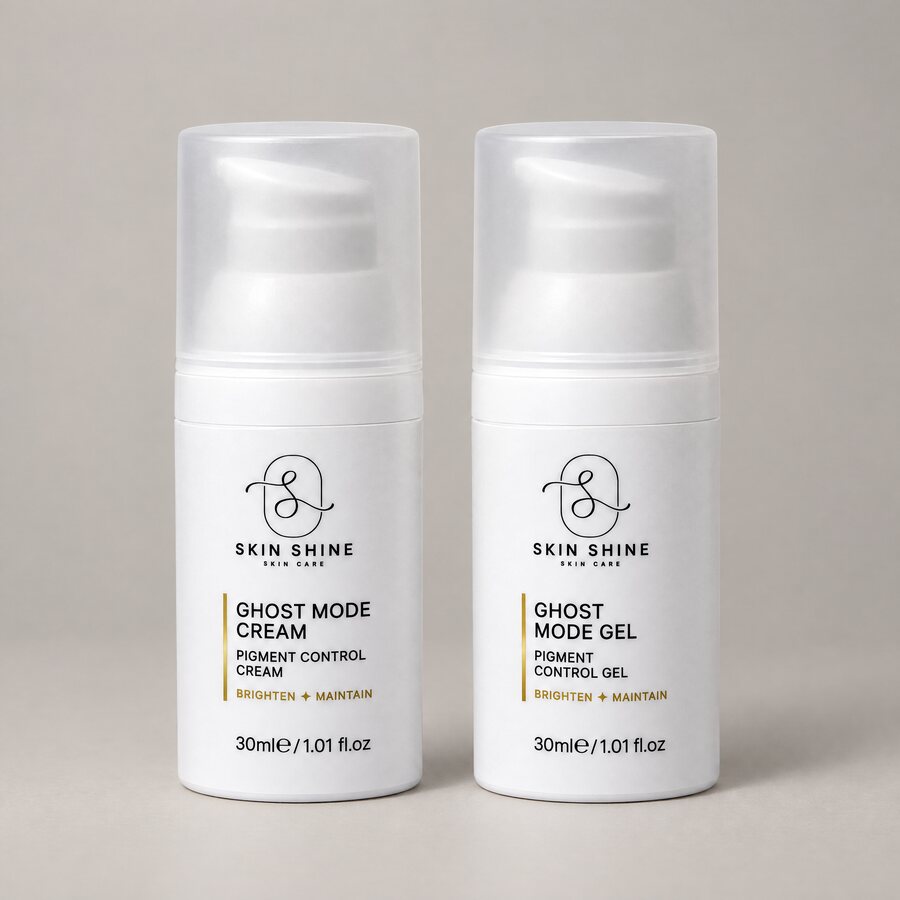
Ghost Mode Cream contains 10 percent topical tranexamic acid. I value that concentration for its role in a pigmentation protocol, but I never present it as a standalone answer. Not Today also includes tranexamic acid within a hydroquinone-free, multi-pathway formula featuring ellagic, phytic, and sebacic acids alongside other supporting actives. The point is not to make TXA perform every job. The point is to combine it intelligently with ingredients that address different steps in pigmentation, barrier function, inflammation, renewal, and protection.
When I select Ghost Mode Cream, I may combine its 10 percent topical TXA with Not Today and other supporting formulas. That can bring roughly 15 different corrective and supportive ingredients into the routine on that day. Each formula has a role. Even at 10 percent, TXA is one player on the board, not the whole game.
Why topical TXA is still a Band Aid
Topical TXA addresses pigment signaling in the skin. That can be useful, and useful matters. But it does not automatically explain why melasma appeared, why it returns, or what is keeping a person reactive. It does not replace daily light protection, barrier support, a careful review of irritation and procedures, or attention to the broader pattern.
Calling it a Band-Aid is not an insult. A Band-Aid has a job. Topical TXA can be a very good one. The mistake is expecting one ingredient to solve a multi-pathway, whole-system pigment pattern by itself.
Oral TXA for melasma
Oral TXA circulates throughout the body. Clinical studies and systematic reviews have reported improvement in melasma, including difficult or recurrent cases. At the same time, long-term safety data for melasma are limited, studies often exclude higher-risk patients, and recurrence after discontinuation can occur.
In the United States, FDA-approved oral TXA labeling is for cyclic heavy menstrual bleeding, not melasma. Prescribing it for melasma is therefore off label. Off-label prescribing is common and can be appropriate, but it requires informed medical judgment, screening, and monitoring.
Potential side effects and risks
The current United States tablet label lists common adverse reactions from heavy-menstrual-bleeding trials such as headache, abdominal pain, back pain, muscle or joint pain, muscle cramps, migraine, anemia, and fatigue. Postmarketing reports include nausea, vomiting, diarrhea, dizziness, visual disturbances, allergic reactions, and thromboembolic events.
The serious concern is blood clotting. Venous and arterial thrombosis or thromboembolism, including deep vein thrombosis, pulmonary embolism, cerebral thrombosis, and retinal vessel occlusion, have been reported. A clot can lead to a stroke, heart attack, lung emergency, or vision-threatening event.
The oral tablet label contraindicates use in people with active thromboembolic disease, a history or intrinsic risk of thrombosis, and in females of reproductive potential using combined hormonal contraception. It also instructs patients to report eye or vision symptoms promptly and warns about severe allergic reactions. Kidney function matters because TXA is largely eliminated through the kidneys.
Seizures are a recognized warning with tranexamic acid products, most often described with high doses in surgical settings or wrong-route administration. That context matters, but it reinforces the larger point: this is a real systemic drug, not a stronger skincare supplement.
Why screening is not optional
A prescriber may need to review personal and family clotting history, hormonal contraception, smoking, migraine and neurologic history, kidney function, cardiovascular risk, pregnancy status, other medications, and eye symptoms. That screening cannot be replaced by an online quiz or a med-spa intake form.
I do not recommend starting, stopping, or changing TXA based on this article. Anyone considering oral TXA should speak with a board-certified dermatologist or another qualified prescriber who can evaluate the individual risk profile and explain off-label use.
Topical and oral TXA compared
- Topical TXA acts locally and is commonly used as part of a skincare routine. Its main risks are usually local irritation and sensitivity.
- Oral TXA acts systemically and may produce stronger improvement for some carefully selected patients, but it carries systemic contraindications and potential adverse effects.
- Neither route guarantees permanent clearance. Melasma can recur when treatment ends or when light, irritation, hormonal change, and other contributors remain active.
- Neither route should replace daily broad-spectrum and visible-light protection.
My preferred strategy
I prefer to keep TXA topical and place it inside a larger system: gentle cleansing, barrier repair, multi-pathway pigment correction, hydration, and a mineral tinted sunscreen with zinc oxide and iron oxides. I also investigate the patterns behind the pigment rather than treating the face as if it exists separately from the rest of the person.
That approach is slower than promising one powerful pill. It is also more aligned with my philosophy. I want the lowest-risk strategy that can be used consistently, adjusted intelligently, and supported from the outside and the inside.
Frequently asked questions
Does topical tranexamic acid thin the blood
Topical products are designed for local use and do not create the same systemic exposure as an oral prescription. However, formulations and skin conditions vary. People who are pregnant, breastfeeding, taking medication, or managing a health condition should ask their medical professional before adding a new active.
Is oral TXA approved for melasma
No. In the United States, oral TXA use for melasma is off label. A qualified prescriber may still use it after evaluating benefits, risks, contraindications, and alternatives.
Will melasma return after TXA
In my view, if the underlying internal drivers are not addressed, melasma will return. The question is when, not if. TXA can reduce visible pigment, but it does not resolve those drivers. Photoprotection and barrier care are essential supports, but they cannot replace identifying and addressing the internal factors contributing to the pattern.
The bottom line
Topical TXA is a strong ingredient and one I value, but it remains one tool. Melasma is never a one-ingredient story, which is why I combine TXA with many other carefully selected ingredients instead of depending on it as a standalone. Oral TXA may improve melasma, yet it asks the whole body to participate in a cosmetic outcome. Because the pigment can return and the medication carries real risks, I personally advise against oral TXA for melasma. Do not borrow a prescription, order it casually online, or assume that a low dose means no risk. Make the decision with a physician who knows your history.
Educational note: This article is educational and is not medical advice. I do not diagnose or treat disease. Melasma and medication decisions should be discussed with a qualified medical professional who knows your health history.