Press
Rewriting the melasma conversation - covers, columns and interviews with Sarit.







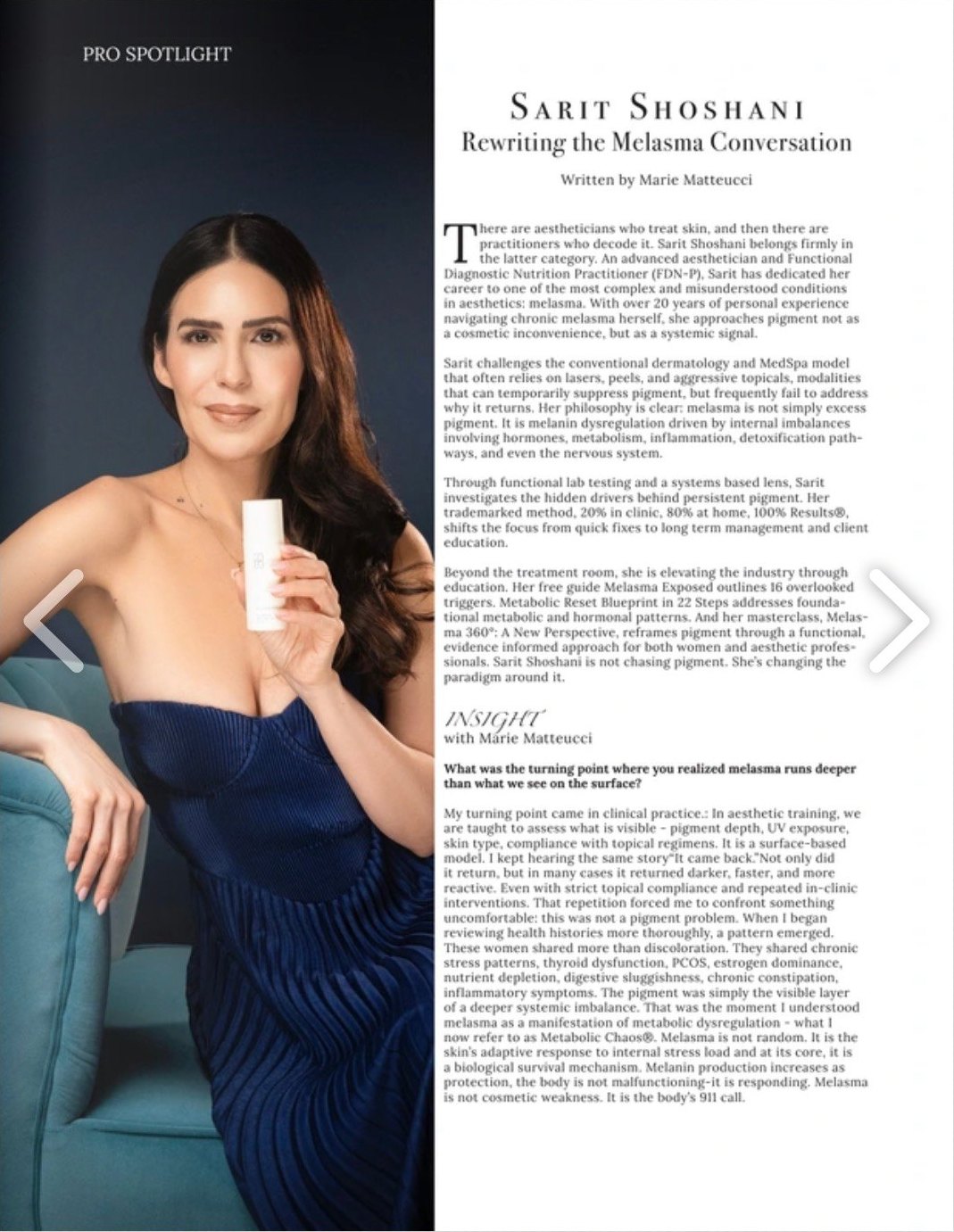
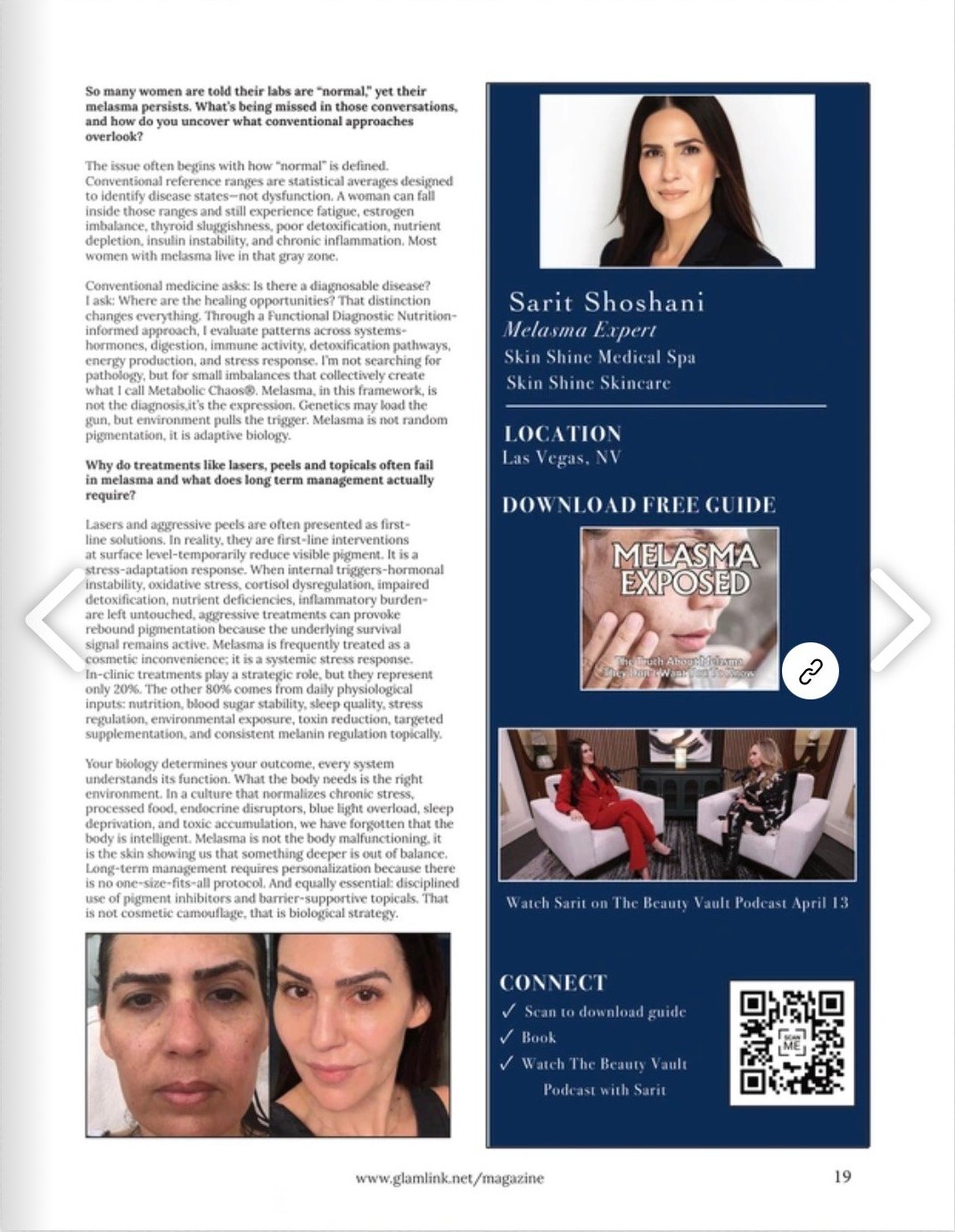
The feature in Glamlink Magazine. Tap a page to view it full size.
Featured · Glamlink Magazine · Pro Spotlight
Written by Marie Matteucci
There are aestheticians who treat skin, and then there are practitioners who decode it. Sarit Shoshani belongs firmly in the latter category. An advanced aesthetician and Functional Diagnostic Nutrition Practitioner (FDN-P), Sarit has dedicated her career to one of the most complex and misunderstood conditions in aesthetics: melasma. With over 20 years of personal experience navigating chronic melasma herself, she approaches pigment not as a cosmetic inconvenience, but as a systemic signal.
Sarit challenges the conventional dermatology and MedSpa model that often relies on lasers, peels, and aggressive topicals, modalities that can temporarily suppress pigment, but frequently fail to address why it returns. Her philosophy is clear: melasma is not simply excess pigment. It is melanin dysregulation driven by internal imbalances involving hormones, metabolism, inflammation, detoxification pathways, and even the nervous system.
Through functional lab testing and a systems based lens, Sarit investigates the hidden drivers behind persistent pigment. Her trademarked method, 20% in clinic, 80% at home, 100% Results®, shifts the focus from quick fixes to long term management and client education.
Beyond the treatment room, she is elevating the industry through education. Her free guide Melasma Exposed outlines 16 overlooked triggers. Metabolic Reset Blueprint in 22 Steps addresses foundational metabolic and hormonal patterns. And her masterclass, Melasma 360°: A New Perspective, reframes pigment through a functional, evidence informed approach for both women and aesthetic professionals. Sarit Shoshani is not chasing pigment. She’s changing the paradigm around it.
Insight with Marie Matteucci
My turning point came in clinical practice. In aesthetic training, we are taught to assess what is visible - pigment depth, UV exposure, skin type, compliance with topical regimens. It is a surface-based model. I kept hearing the same story “It came back.” Not only did it return, but in many cases it returned darker, faster, and more reactive. Even with strict topical compliance and repeated in-clinic interventions.
That repetition forced me to confront something uncomfortable: this was not a pigment problem. When I began reviewing health histories more thoroughly, a pattern emerged. These women shared more than discoloration. They shared chronic stress patterns, thyroid dysfunction, PCOS, estrogen dominance, nutrient depletion, digestive sluggishness, chronic constipation, inflammatory symptoms. The pigment was simply the visible layer of a deeper systemic imbalance.
That was the moment I understood melasma as a manifestation of metabolic dysregulation - what I now refer to as Metabolic Chaos®. Melasma is not random. It is the skin’s adaptive response to internal stress load and at its core, it is a biological survival mechanism. Melanin production increases as protection, the body is not malfunctioning - it is responding. Melasma is not cosmetic weakness. It is the body’s 911 call.
The issue often begins with how “normal” is defined. Conventional reference ranges are statistical averages designed to identify disease states - not dysfunction. A woman can fall inside those ranges and still experience fatigue, estrogen imbalance, thyroid sluggishness, poor detoxification, nutrient depletion, insulin instability, and chronic inflammation. Most women with melasma live in that gray zone.
Conventional medicine asks: Is there a diagnosable disease? I ask: Where are the healing opportunities? That distinction changes everything. Through a Functional Diagnostic Nutrition-informed approach, I evaluate patterns across systems - hormones, digestion, immune activity, detoxification pathways, energy production, and stress response. I’m not searching for pathology, but for small imbalances that collectively create what I call Metabolic Chaos®. Melasma, in this framework, is not the diagnosis, it’s the expression. Genetics may load the gun, but environment pulls the trigger. Melasma is not random pigmentation, it is adaptive biology.
Lasers and aggressive peels are often presented as first-line solutions. In reality, they are first-line interventions at surface level - temporarily reduce visible pigment. It is a stress-adaptation response. When internal triggers - hormonal instability, oxidative stress, cortisol dysregulation, impaired detoxification, nutrient deficiencies, inflammatory burden - are left untouched, aggressive treatments can provoke rebound pigmentation because the underlying survival signal remains active. Melasma is frequently treated as a cosmetic inconvenience; it is a systemic stress response.
In-clinic treatments play a strategic role, but they represent only 20%. The other 80% comes from daily physiological inputs: nutrition, blood sugar stability, sleep quality, stress regulation, environmental exposure, toxin reduction, targeted supplementation, and consistent melanin regulation topically.
Your biology determines your outcome, every system understands its function. What the body needs is the right environment. In a culture that normalizes chronic stress, processed food, endocrine disruptors, blue light overload, sleep deprivation, and toxic accumulation, we have forgotten that the body is intelligent. Melasma is not the body malfunctioning; it is the skin showing us that something deeper is out of balance. Long-term management requires personalization because there is no one-size-fits-all protocol. And equally essential: disciplined use of pigment inhibitors and barrier-supportive topicals. That is not cosmetic camouflage, that is biological strategy.
As published in Glamlink Magazine, Pro Spotlight. Article by Marie Matteucci.
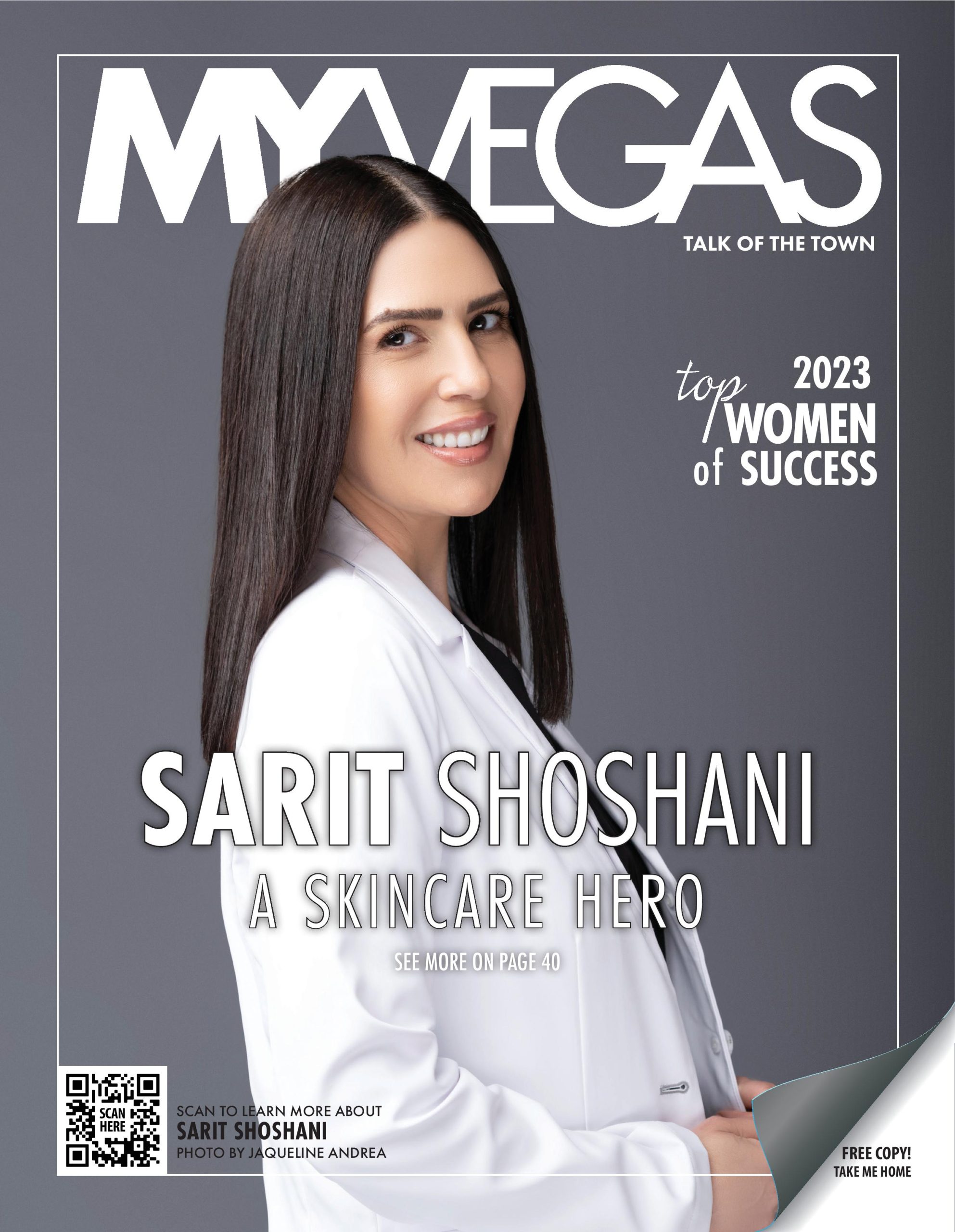
MyVegas Magazine · 2023
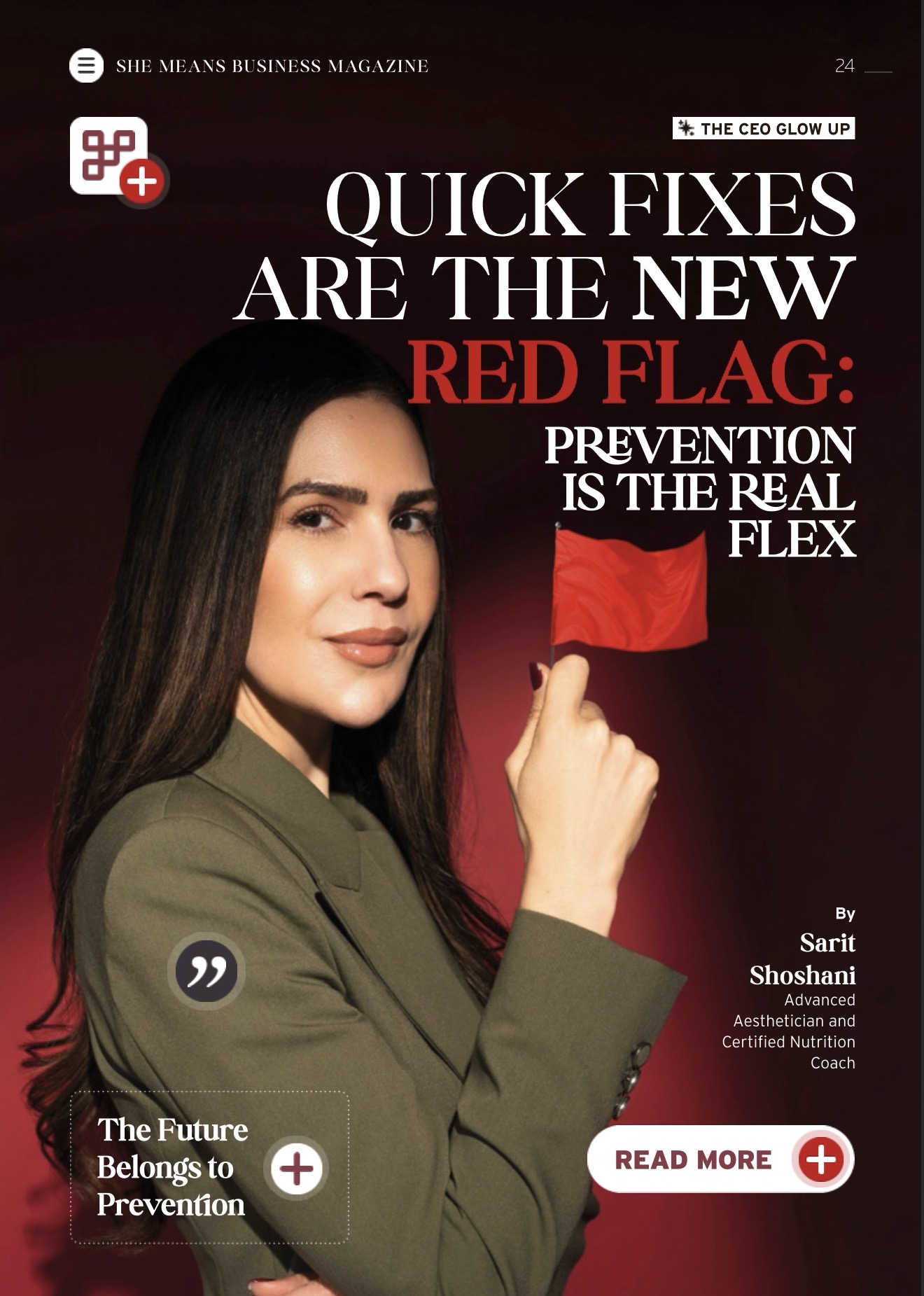
She Means Business · Mar 2026

She Means Business · May 2026

She Means Business · Jul 2026

She Means Business · Sep 2026
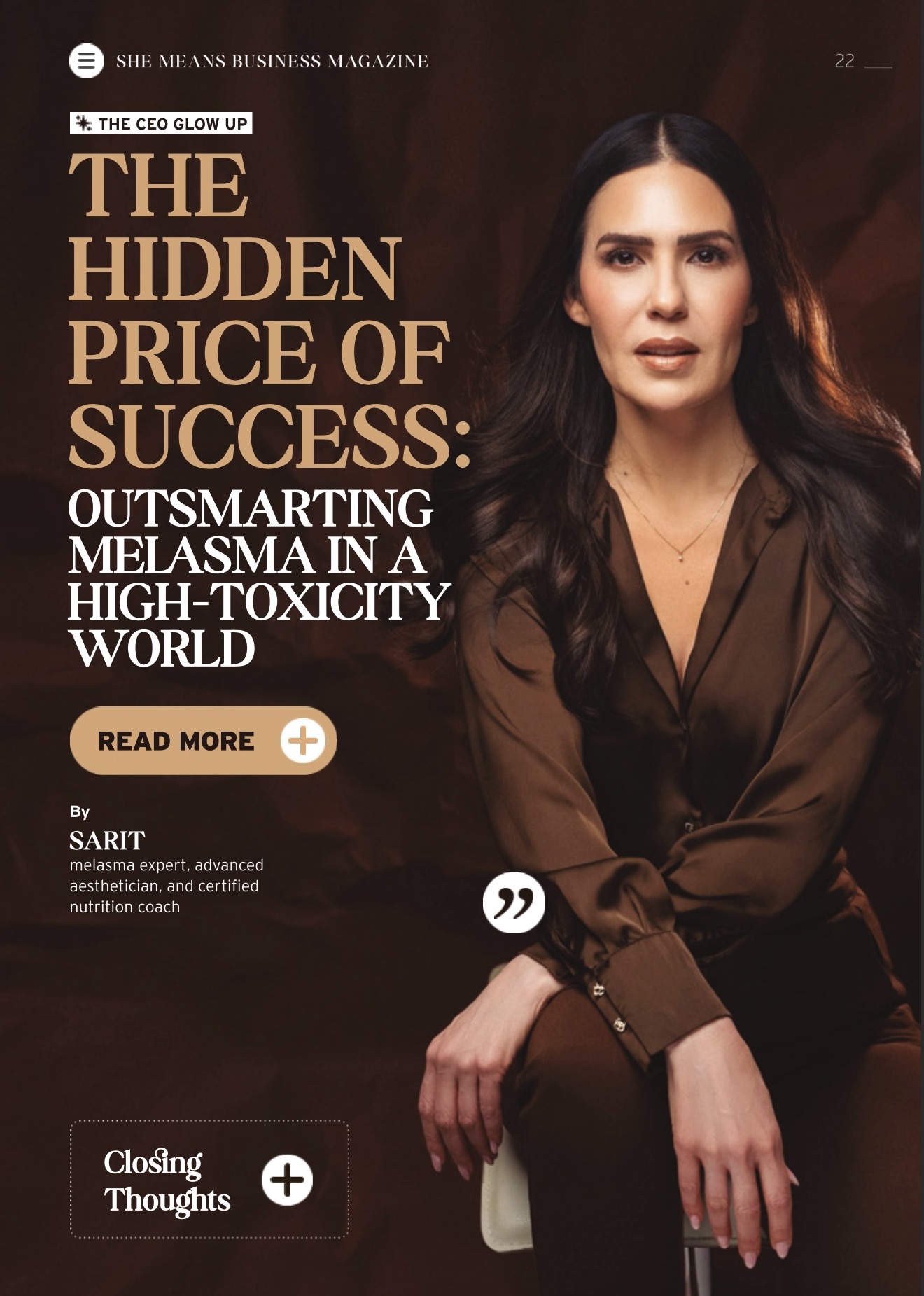
She Means Business · Jan 2026

Glamlink Magazine · Pro Spotlight
Authority Magazine on Medium
Business View Journal
The Chicago Weekly
For interviews, features and collaborations, contact Sarit directly.